


NEWS
BLOGS / LECTURES / EXHIBITIONS / AWARDS / BOOKS / NOTES on editioning photographs, estate prints, print types etc / LINKS
PHOTOGRAPHY BLOGS
Still Searching – An Online Discourse on Photography, is aimed at anyone interested in photography and visual theory.
On 15.1.12 Fotomuseum Winterthur, Zurich, launched a new English blog on the theory and history of photography which aims to be a continually growing and developing internet discourse on the medium of photography featuring a multitude of participants.
It is conceived as an online debate on forms of photographic production, techniques, applications, distribution strategies, contexts, theoretical foundations, ontology and perspectives on the medium.
It explores photography's role as a seminal visual medium of our time.
Athol McCredie, Curator Photography & Lissa Mitchell, Curator Historical Documentary Photography
Museum of New Zealand Te Papa Tongarewa.
http://www.blog.tepapa.govt.nz/category/collections-online/photography-collection/
You can also click on the authors name [Athol McCredie / Lissa Mitchell] at bottom of a blog post and pick up all previous postings by whichever curator did them. Or go to the our authors at bottom left.
The Asia-Pacific Photobook Archive www.photobookarchive.com
The Archive is located within:
Magic Johnston Studios
27-29 Johnston St
Collingwood Melbourne
Thursday - Saturday 12noon - 6pm
Fairfax Publications (1841-2018) was the preeminent publisher of newspapers in New Zealand and Australia. Duncan Miller Gallery bought the vintage photo archive of these publications after they were at risk of being destroyed. This Fairfax Archive consists of the original photographs used to create these newspapers. The negatives for many of these photographs have been lost or degraded over time, and these photographs offered are often the only copy available outside public institution collections.
Our state-of-the-art storage facility features temperature, climate and lighting control and offers the best archival storage these historic works have ever known. Our management and staff are credentialed photography experts with years of experience in the field.
The Arts House Trust, Pah Homestead, has a public gallery space dedicated to the medium of photography
72 Hillsborough Road
Auckland
Tuesday to Friday 10am - 3pm
Saturday & Sunday 10am - 5pm
Canterbury Centre For Historic Photography & Film Inc
Our mission, as a photographic museum,is to save the photographic heritage and art of Canterbury.
A short history of New Zealand Photography
- a small overview including a timeline and a non-authoritative history of NZ photography in 20 photographs.
N.Z History website.
International Museums, Centers, Houses & Departments of Photography
Courtesy Queensland Centre for Photography LINK
The George Eastman Museum has launched a new platform that allows public online access to more than 250,000 objects from its world-class collections LINK
Exploring Photography at the V & A - one of the best museum sites devoted to photography
Hocken Snapshop of Photographs from the Library’s Collection Goes Live
A new online service making the photographic collections housed at the Hocken Library more accessible to remote users is now available.
Thanks to a grant from the NANI fund, over 33,000 images have been digitized, relating to people and places from all over New Zealand. A small portion of the Hocken’s large shipping collection is also included.
Copies of the images are be available for purchase over the internet.
A zoom function also assists in the use of the photographs for research purposes.
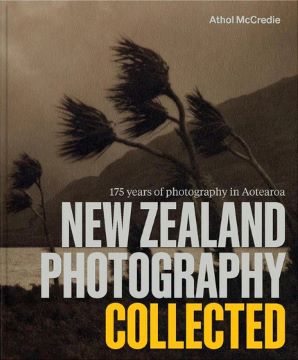
New Zealand Photography Collected: 175 Years of Photography in Aotearoa
The new edition of a New Zealand photography classic.
By Athol McCredie
When it was first published in 2015, New Zealand Photography Collected was a landmark book, captivating audiences. In this fully revised and enriched edition, of the more than 400 images, almost half are new, reflecting the dynamic and increasingly diverse nature of the collection, allowing for previously unseen treasures, and enabling familiar works to be recontextualised with fresh insights.
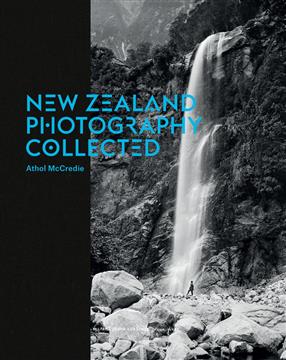
New Zealand Photography: Collected
by Athol McCredie
This up-coming publication offers a unique visual history of photography in New Zealand, with 350 images, from 1840 to the present day.
New Zealand Photography spans the country’s history, from early 19th-century portraits of Maori and scenic views to the latest contemporary art photography. The book features more than 350 photographs drawn from the national collection at Te Papa, with each image is beautifully reproduced and accompanied by richly informative descriptions. Author Athol McCredie offers a fresh and compelling narrative that foregrounds photography’s wide-ranging uses across portraiture, landscape, science, documentary photography, and art, and contemplates the way it has been collected, both privately and publicly, through time. What emerges is not only an important new history of the photographic medium but also a surprising and powerful portrait of New Zealand. Featured photographers include by James Bragge, Leslie Adkin, Burton Brothers, John Pascoe, Brian Brake, Frank Hofmann, Ans Westra, Eric Lee-Johnson, Marti Friedlander, Laurence Aberhart, Ann Shelton, Glenn Jowitt, Anne Noble, Yvonne Todd, and many others.
Athol McCredie is a curator of photography at the Museum of New Zealand Te Papa Tongarewa, where he has worked since 2001. He has been involved with photography as researcher, curator, and photographer since the 1970s. He is the author of "Brian Brake: Lens on the World" and "Fields of Golden Daffodils" and the co-author of "Witness to Change."
Art and Photography at Te Papa
Radio New Zealand review 11.12.15
Slow Burn showcases the diversity of photography by women and non-binary artists in Aotearoa New Zealand from the 1960s to today.
This major survey exhibition from Te Papa’s collections, curated by Lissa Mitchell, sparks a conversation between past and present – exploring themes of identity, whānau, place, and connections across time. The exhibition also asks: what influence did the first and second wave of feminism have on photographers today?
Running through Slow Burn is the idea that creating takes time. Photography is slow and thoughtful work made with care.
These artworks acknowledge the spirit of sharing and cooperation that allowed their creation – whether with others, the land, or photographic processes of the past.
These works are memorials or aspirations. They are big, small, loud, angry, beautiful, contemplative, reflective, uncertain, bewildering. They are as diverse as the people who made them.
https://www.tepapa.govt.nz/visit/exhibition/slow-burn-women-and-photography
See what I can see: New Zealand photography for the young & curious
by Gregory O’Brien
Photography was invented the year before the Treaty of Waitangi was signed. Within a few years, cameras were charting the life and times of people at this end of the planet.
See What I Can See is an introduction to New Zealand photography that will appeal to young and curious photographers, students of New Zealand art history, or anyone who wants to sample the extraordinary range of images made in this country by our photographers.
Auckland University Press
978 1 86940 843 5
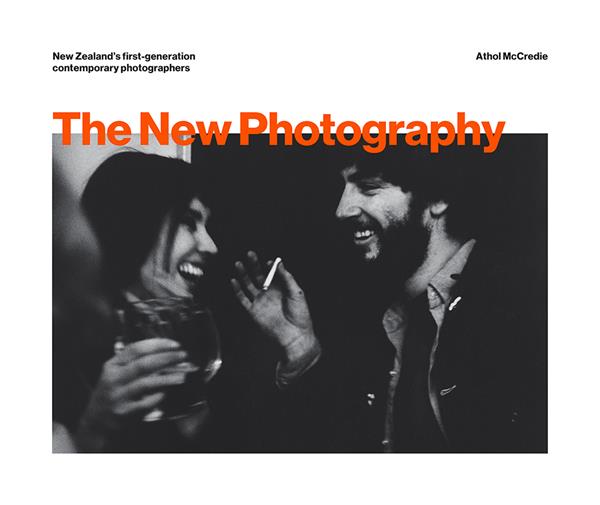
The New Photography
New Zealand’s photographer pioneers of the 1960s and 1970s
Edited by Athol McCredie
Publication date: June 2019
Extent: 216 pages
Format: Hardback
ISBN: 978-0-9951031-9-1
Te Papa Press
In this handsome book, leading photography curator Athol McCredie tells the story of the beginnings of contemporary photography – also known as art photography – in New Zealand. Through interviews with the photographers Gary Baigent, Richard Collins, John Daley, John Fields, Max Oettli, John B Turner, Len Wesney and Ans Westra, and accompanied by an outstanding introductory essay, McCredie shows how the break-through approach of personal documentary photography created a new field of photography in New Zealand that was not simply illustrative but rather spoke for itself and with its own language.
INTERVIEW with Athol McCredie Art photography in Sixties New Zealand Standing Room Only, 9 June 2019
Through Shaded Glass: Women and Photography in Aotearoa New Zealand 1860–1960
by Lissa Mitchell
Women have largely been left out of histories of photography in Aotearoa – until now.
From hand-coloured portraits to family albums, these works showcase the talent and determination of their makers.
CIRCUIT
ARTIST
FILM & VIDEO
Aotearoa
New Zealand
LINK
 MARIETTE prints offers for sale a wide range of original prints from the sixteenth to the twenty-first centuries. By original prints, we mean handmade engravings, etchings, woodcuts, mezzotints, linocuts etc., made by the artists themselves or by printmakers interpreting the design of an artist.
Photofile Australasia's photography publication
Published since 1983 by the Australian Centre for Photography Ltd
SUBSCIPTION: PDF
............... .... LINK
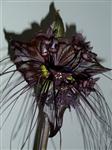 …not just to show, but to say…
Bat Flower
This plant is native to South East Asia although I saw this particular specimen growing in Auckland.
A flower like this is very tempting to a photographer like me but I can see that although the image is superficially interesting, I have not been able to add anything extra.
In other words, it is important not just to show, but to say.
Someone once said that a photographer must place themselves between the camera and the subject, that a good photograph is one taken through a personality.
It is my personality that is lacking in this image. Still, it is important to keep trying for new images.
Photos that don't work are vital in that we must understand why they don't succeed otherwise one is doomed to repeat them.
Peter Peryer BLOG
21. 6.11
Peter Peryer: Portrait of a Photographer
Courtesy: NZ On Screen
Laurence Aberhart URBIS 66 p62 – 67
“ If you do it well…the place goes from the specific to the universal” [LA]
VIDEO Laurence Aberhart discusses his work at Govett-Brewster Art Gallery
LECTURES......SYMPOSIA......ARTIST PROPOSALS
Exhibitions, Events & Talks @ Sarjeant Gallery Whanganui
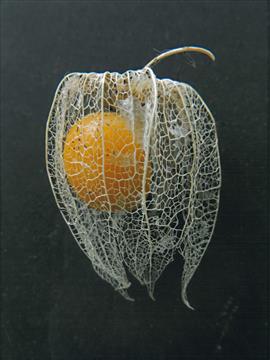
Peter Peryer: The Art of Seeing
New Zealand International Film Festival
Shirley Horrocks’ richly illustrated portrait of the life and career of one of New Zealand’s most important photographers, who dedicated his life to seeing and making works of art out of the everyday.
RadioNZ Standing Room Only 21.7.19
Photographer Peter Peryer has shared his life story, and his wry reflections on his chosen art form with documentary maker Shirley Horrocks.
Shirley Horrocks intended it to provide a permanent record of his long life and four decades of photography, including his many many portraits of his ex wife Erika. She talked to Lynn Freeman about her first meeting with Peter.
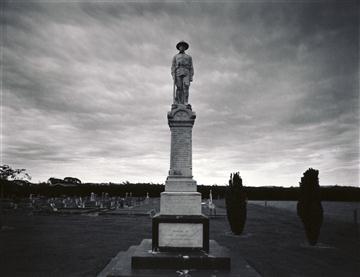
War memorial, Isla Bank, Southland, 12 December 2010
ANZAC: Photographs by Laurence Aberhart was published in April 2014 to coincide with the opening of a major exhibition at Dunedin Public Art Gallery. The exhibition runs until August 31: then tours.
Victoria University Press in association with Dunedin Public Art Gallery
This hardback volume features large-format reproductions of 72 photographs by Laurence Aberhart.
They provide an almost-comprehensive record of fifty New Zealand ‘Digger’ memorials (those featuring statues rather than abstract sculpture), and a representative range of their Australian counterparts.
- - - - -
INTERVIEWS: Radio New Zealand National LINK
................ ANZAC Day, Friday 25 April 2014 with Richard Langston.
Internationally-recognised photographer Laurence Aberhart discusses the inspiration behind his
new book Anzac, which documents war memorials from New Zealand and Australia.
The Age Melbourne LINK
.................ANZAC Day, Friday 25 April 2014
.................Capturing war monuments
REVIEWS:
The Press, Christchurch, 17 Apr 2014, by Christopher Moore Of Arts PDF
New Zealand Books, Vol. 24, No. 2 Issue 106.Winter 2014, page 7, The lonely soldier,
by Peter Ireland
Sydney Review of Books Tim Corballis 26/ 08/ 2014
Landfall Review Online 1 12.14 by Nina Seja
EXHIBITIONS
Opening Saturday 28 February at Te Papa Wellington – Slow Burn: Women and Photography
Slow Burn showcases the diversity of photography by women and non-binary artists in Aotearoa New Zealand from the 1960s to today.
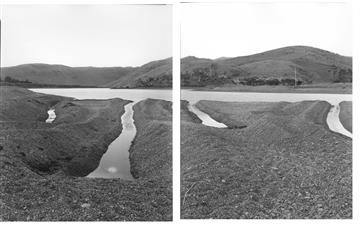
Mark Adams: A Survey | He Kohinga Whakaahua
Christchurch Art Gallery
March 7– July 26
AWARDS
2023 Arts Foundation Te Tumu Toi Laureate Award Recipients include Peter Black (Photography)
- 2023 Marti Friedlander Photographic Award
Black’s prolific career also spans decades, and his ability to capture people, a moment or a mood have seen him recognized as one of the country’s best, with works held in many national and private collections.
Fiona Amundsen is one of four finalists in the 2020 Walters Prize.
Dedicated to presenting the very best of New Zealand contemporary art, The Walters Prize 2020 is Aotearoa New Zealand’s most significant contemporary art award.
It Was a Cave Like This, 2017-18, one-channel HD video, 26min 54sec, in A Body that Lives, ST PAUL St Gallery, AUT, 28 September – 26 October 2018.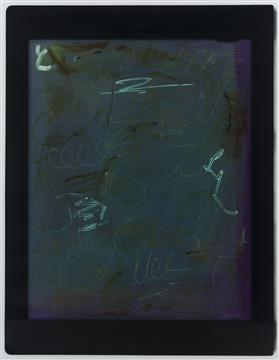
Maternal Line,2017 by Justine Varga, wins Olive Cotton Portrait Prize [Australia] for 2017
One day, not so long ago, I came upon my maternal grandmother hunched over a table, vigorously testing a series of pens by scribbling with each of them in turn on a piece of paper. Captivated by this busy repetition of gestures, so reminiscent of her character, I asked her to continue her task, but on a piece of 4 x 5 inch negative film. Having left these traces of her hand on this light-senstive surface, she also, at my request, rubbed some of her saliva on the film, doubling her bodily inscription there. I then processed the film and printed it at large scale. A collaboration across generations, with her born in Hungary and me in Australia, the resulting image looks abstract but couldn’t be more realist; no perspectival artifice mediates her portrayal of herself or our genetic link, with both now manifested in the form of a photograph.[Justine Varga]Joyce Campbell is one of four finalists in the 2016 Walters Prize.
The Walters Prize is dedicated to presenting the very best of New Zealand contemporary art and the exhibition is on at Auckland Art Gallery, July to October, 2016.
The artworks that formed the basis of this artist’s selection for the award is Flightdream, 2015
Anne Noble has won the Japanese Higashikawa Prize for an Overseas Photographer; the 31st recipient
The overseas photographer award raises the Japanese profile of exceptional overseas photographers who are relatively unknown in Japan. Each year, the awards committee focuses on a different country or region.
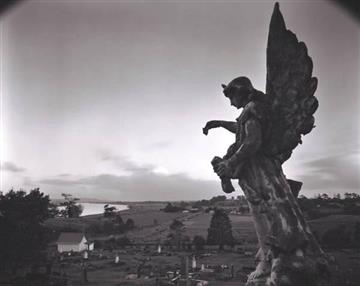
2013 Arts Foundation Laureate Award recipient Laurence Aberhart
Laurence Aberhart is a committed visual artist of the highest order. He educates our emotions, showing us who we are and how we might see; how we see ourselves as citizens of New Zealand and beyond.
For close to 40 years he has produced an astounding body of work that is unrivalled in its intensity, richness and the layers of cultural and photographic history.
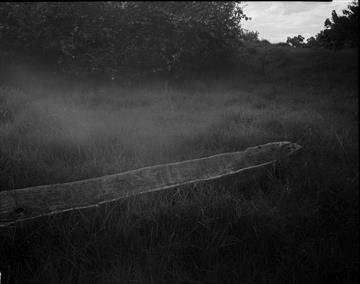
The 2013 Arts Foundation Award for Patronage Donation Recipient
Mark Adams - a photographer working with subjects of cross-cultural significance. His photographs of Samoan tatau, Māori-Pakeha interactions around Rotorua, historic sitesaround the South Island and his investigations into New Zealand's post-colonial history have been extensively exhibited within New Zealand, as well as in Europe, Australia, South Africa and Brazil's Sao Paulo biennale.
2013 Arts Foundation Marti Friedlander Photographic Award recipient
Jono Rotman mines edge states and points of transition. For example, his work explores the continuing cataclysm of colonization, and the collision of civilization and the natural world. Among his subjects in New Zealand are sites of incarceration and gangs. In America, he is exploring the decline of empire. His often large-scale works of subjects great and terrible are a controlled meditation on the sublime.
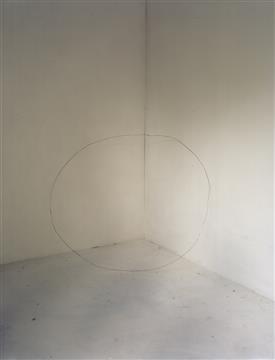
Justine Varga Moving out #1, 2012
Justine Varga has won the 2013 Josephine Ulrick and Win Shubert Photography Award.
Until May 19
The prestigious $20,000 award was announced at the Gold Coast City Gallery and was jointly awarded to Liam Benson and Justine Varga.
Now in its 13th year, The Josephine Ulrick and Win Schubert Photography Award is considered one of the most important annual surveys of contemporary Australian photographic practice. This highly anticipated award, with a total $30,000 in prizes and acquisitions, is a highlight of Gold Coast City Gallery’s exhibition program. From close to 300 entries, this year’s guest judge New Zealand photographer Anne Noble selected 65 finalists and both winners.
On judging Varga's work, Noble commented "This photograph was made by someone who clearly loves the medium of photography. I was impressed by its simplicity, beauty and its evocation of experiences that exist beyond the frame of the image. Justine Varga brings a contemporary conceptual rigour to a complex observational project. Drawing with light, surfaces and a simple line she binds the surfaces of an empty room to the space of interior memory."
Fiona Pardington is one of three artists Selected for 2013 McCahon Residencies by the McCahon House Trust at its French Bay residence and studio.
Fiona Pardington has gained national and international recognition for her photographs, which have explored themes of medical and psychoanalytical imagery and more recently taonga relating to her Maori heritage. Over the past year, Fiona Pardington has been working on an extended body of still life photographs. She will work on a new and final suite of still life photographs while at the McCahon Artists’ Residency delving into McCahon’s identification with whenua/landscape around the western beaches.
Ben Cauchi has been awarded the 2012 Creative New Zealand Berlin Visual Artists Residency at the Künstlerhaus Bethanien in Berlin.
The biennial 12-month residency is an opportunity for New Zealand visual artists to work on an approved project, gain professional development, build international networks and help raise awareness of New Zealand visual arts.
On 29.11.11 The N.Z. Arts Foundation launched New Zealand's first Macquarie Private Wealth New Zealand Arts Awards:
Fiona Pardington was awarded a Laureate Award
Ben Cauchi was awarded a New Generation Award
Neil Pardington was awarded the Marti Friedlander Photographic Award
Greg Semu's work [above] has been shortlisted for the Singapore Art Museum Signature prize
2011 Icon Award recipients include: photographer Marti Friedlander
The Icon Awards, limited to a living circle of twenty stellar New Zealand artists, are the Arts Foundation's highest honour. Twenty-six artists, including Ans Westra, have been honoured at previous ceremonies; the 2011 Awards re-establish a living circle of twenty recipients.
Arts Foundation chairperson Fran Ricketts said "the work of Icon artists represents a legacy to, and a mark on, New Zealand culture. They have made a significant impact on their chosen art form, remain influential
and often have achieved amazing international success. Each artist is celebrated for their extraordinary achievements and collectively they make a powerful statement about the quality of New Zealand artists."
MARTI FRIEDLANDER began taking photographs professionally in 1964 and is responsible for some of New Zealand's most iconic photographs. She is very well known for her 1972 collaboration with Michael King, Moko: the art of Maori tattooing.
Ben Cauchi is a recipient of the Rita Angus Artist’s Residency June 6 – September 2, 2011.
The Residency supports an artist to produce a new body of work that reflects upon the interplay between technology and culture. The Residency also encourages the artist to enter into dialogue with the Wellington arts community and to exhibit and discuss their practice. The Rita Angus Residency is offered in association with the Wellington Institute of Technology’s School of Creative Technologies.
James K. Lowe has been selected to represent New Zealand in the collective photography show
PHOTOQUAI 2011
This outdoor exhibition, along the banks of the Seine in Paris, takes place from September 13 - December 4
Françoise Huguier is the creative director of the biennale
Celine Martin-Raget and Anne Noble are the New Zealand region co-curators
Previous NZ contributors have been: Mark Adams, Joyce Campbell and Fiona Pardington
The McCahon House Trust moves into its fifth year of residencies in 2011 and is pleased to announce
Liyen Chong, Glen Hayward and Ben Cauchi as the 2011 artists in residence at the McCahon House Residency Programme in Titirangi.
Photographer Ben Cauchi, will begin his three-month residency in 2011. Ben completed an advanced diploma in photography at Massey University, Wellington in 2000. Over the past decade, he has examined the nature of photography and the psychological dimensions of viewing. His work is created by a wet-collodian process, on glass or metal, a process dating back to the middle 19th century. He is excited to have the opportunity to work in a large studio and advance his practice into new areas of critical importance, and, to have access to have access to a wider range of facilities and resource than those available in Whanganui where he is currently based.
Paul McNamara, McNamara Gallery: I have been working with Ben Cauchi since early 2002, and the public and institutional response to his work has been particularly strong. Deftly combining the aesthetic properties of 19C processes with contemporary materials and technology, he achieves a transcendent and unique result, which, like the very best photographs, confidently defies ready description.
Laurence Aberhart is one of three recipients of the Antarctica New Zealand 2010/11 Arts Fellowships – he travelled to Scott Base in November 2010.
Fiona Pardington has been chosen as one of three artist laureates for the 2010 Artistic Creation Projects by the Musee Quai Branly in Paris. The programme allows contemporary non- European artists to present a project that offers a connection with the Museum's mission to honour non-occidental cultures and civilisations.
James K. Lowe Older artist category winner Eden Arts Young Artists Awards
Winner of the 2010 COCA Anthony Harper Award
Curator, writer and editor, Lara Strongman announced that Wellington artist, Ann Shelton, is the winner of the 2010 COCA Anthony Harper Award for Contemporary Art.
Her work, Wintering, after a van der Velden study, Otira Gorge, was selected by Strongman who commented
…this large two-panelled photograph reworks one of Canterbury art history's most famous landscape views. Shelton describes her doubled photographs as a kind of ‘visual stammering': she is interested in the way that this process disrupts the presumed authenticity of a familiar image. Her photographs of New Zealand cultural landmarks explore what traces of an act might remain in the landscape or in the memory, decades later.
Shelton 's Wintering is a powerful, haunting image, whose economy of expression belies the conceptual richness of the work.
This year the gallery received more than 350 entries from artists from throughout New Zealand, with 73 works selected for exhibition. There are no restrictions on the scale or media of works.
The eight Fulbright New Zealand Senior Scholars include second time Fulbrighter Laurence Aberhart, who previously received a 1988 Fulbright New Zealand Cultural Development Grant to take photographs while travelling the length of the Mississippi and throughout the southern states of the US.
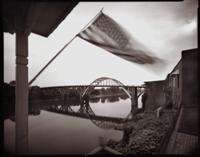
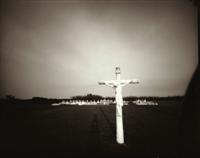
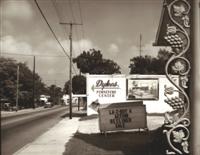
This time he will focus his attention on the Atlantic Seaboard states and visit whaling ports from which fleets sailed to New Zealand and the South Seas in the early 1800s, with a view to unearthing and photographing New Zealand artefacts and materials collected by early American whalers.
The Arts on Sunday with Lynn Freeman Sunday 5 December
12:40 Laurence Aberhart on photographing the once great Kodak film company headquarters, now fallen on hard times
Wayne Barrar & Ans Westra are included in the Prix Pictet Earth Book
It presents the portfolios of the 12 short-listed nominees [including Edward Burtynsky, Andreas Gursky and Nadav Kander] as well as a number of images by other selected nominees.
10th annual Arts Foundation Laureates announced
The Arts Foundation has announced its five 2009 Laureates and they include Anne Noble
Anne Noble is one of New Zealand 's most widely recognised and respected contemporary photographers.
She has been described as “one of New Zealand photography's most subtle and poetic of practitioners”.
Anne is Professor of Fine Arts (Photography) at Massey University in Wellington , and was awarded the New Zealand Order of Merit for services to photography in 2003.
Anne's series Ruby's Room was selected by the Musee du Quai Branly in Paris as the keynote contemporary exhibition for the inaugural Paris PhotoQuai Biennale of Photography in 2007.
Anne travelled to Antarctica in 2002 as part of the Artists to Antarctica scheme. She returned to Antarctica in 2008 after winning a prestigious US National Science Foundation Artists and Writers Award.
Photographer Anne Noble
One of the new Arts Foundation Laureates, photographer Anne Noble, whose three trips to Antarctica have produced a large and intriguing body of work.
The Marti Friedlander Photographic Award
Supported by the Arts Foundation, the Marti Friedlander Photographic Award was launched in 2007.
The Award is presented every two years to an established photographer with a record of excellence and potential to continue working at high levels.
The Award includes a $25,000 donation for the photographer to help further their career.
This year's recipients are Mark Adams & John Miller
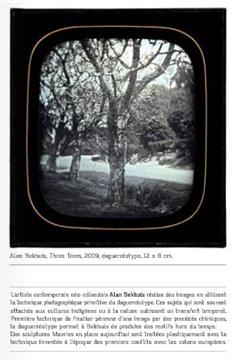
Alan Bekhuis sent six daguerreotypes to the international contemporary daguerreotypes exhibition in
Bry-sur-Marne, France and all have been acquired by the Bry Museum in Daguerre's town, where they are establishing a Museum to honour the photographic pioneer.
195 daguerreotypes were on exhibition from 44 artists.
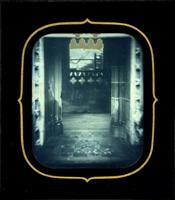
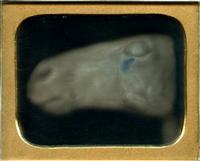

Journal Hippocampe From France, a literary and artistic journal, Issue 4 is devoted to New Zealand and includes the work of Alan Bekhuis [also on cover] LINK
 .................................
BOOKS
and
other relevant publicatons
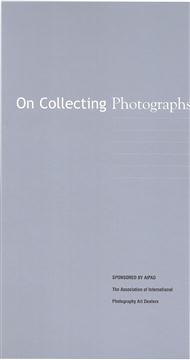
We have available the booklet: ON COLLECTING PHOTOGRAPHS
sponsored by The Association of International Photography Art Dealers AIPAD
This booklet is intended as a reference tool for those with an interest in collecting fine art photography.
The goal is to answer common questions and to provide a resource for future insight, information and understanding.
$40 + $3p & p [within NZ]
& this leads onto:
.............COLLECTING
PHOTOGRAPHY Gerry Badger [Mitchell
Beasley]
A HISTORY OF NEW ZEALAND PHOTOGRAPHY
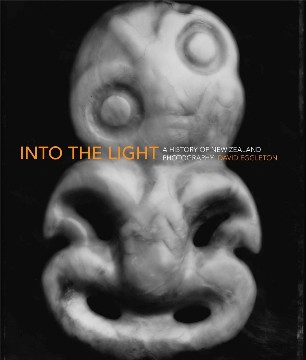
ISBN is 1-877333-54-5
Photography Theory in Historical Perspective
Hilde Van Gelder, Helen W. Westgeest
ISBN: 978-1-4051-9161-6
April 2011
Wiley-Blackwell
Photography Theory in Historical Perspective: Case Studies from Contemporary Art aims to contribute to the understanding of the multifaceted and complex character of the photographic medium by dealing with various case studies selected from photographic practices in contemporary art, discussed in the context of views and theories of photography from its inception.
Early New Zealand Photography
Images and Essays
Edited by Angela Wanhalla & Erika Wolf
24 short essays on individual photographs
Contributors:
Wayne Barrar, Roger Blackley, Gary Blackman, Chris Brickell, Barbara Brookes, Sandy Callister, Simon Dench, Jocelyne Dudding, Keith Giles, Jill Haley, Ken Hall, Ruth Harvey, Kerry Hines, Antje Lübcke, Brian Moloughney, Max Quanchi, Rebecca Rice, Cathy Tuato'o Ross, Simon Ryan, Angela Wanhalla, Christine Whybrew, Erika Wolf
Development of photography from daguerreotypes to Kodak cameras
Includes a guide to NZ photographic collections and an extensive bibliography of related works
This book looks at a range of New Zealand photographs up to 1918 and analyses them as photo-objects, considering how they were made, who made them, what they show and how our understanding of them can vary or change over time. This emphasis on the materiality of the photograph is a new direction in scholarship on colonial photographs.
REVIEW
EyeContact Peter Ireland
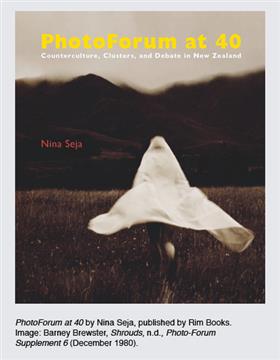
Rim Books and PhotoForum are pleased to announce the forthcoming release of:
PhotoForum at 40: Counterculture, Clusters, and Debate in New Zealand
by Nina Seja.
In this richly illustrated publication, art historian Nina Seja gives an illuminating account of the communities, relationships, and events that have shaped PhotoForum's first forty years, and charts the development of photographic art in New Zealand during this time.
ISBN 978 0 473 28325 4
Published by Rim Books, as PhotoForum issue #83.
300pp, 245x290mm portrait format, 167 plates with additional illustrations, softcover with flaps.
REVIEWS: EyeContact 22.7.14 Peter Ireland
................Landfall 1.5.15 Gary Blackman
http://www.landfallreview.com/arts-and-culture/looking-directly-at-the-camera/
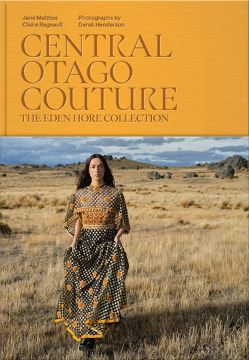
Central Otago Couture: The Eden Hore Collection
Jane Malthus, Claire Regnault, and Derek Henderson
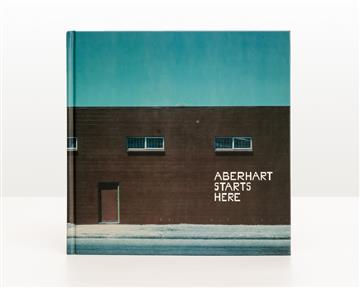
Aberhart Starts Here
Author: Lara Strongman with Laurence Aberhart
Christchurch Art Gallery
Pages: 136 (with 62 full-page images)
Dimensions: 220 x 220mm
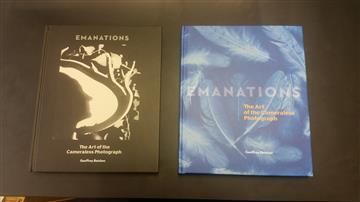
Emanations: The Art of the Cameraless Photograph
Essay by Geoffrey Batchen.
ISBN 9783791355047
A unique exploration of the art of cameraless photography, this expansive book offers an authoritative and lavishly illustrated history of photographs made without a camera, along with a critical discussion of the practice.
Authored by Geoffrey Batchen, this major new publication Emanations The Art of the Cameraless Photograph is co-published by Prestel/DelMonico books (Munich/New York) and the Govett-Brewster Art Gallery in New Plymouth, New Zealand.
Since the early 19th century and the invention of photography, artists have been experimenting with various methods for creating photographs without a camera. At once exhaustive and compelling, this book reveals the myriad approaches artists have used to create photographic images using just paper or film and a source of radiation. Simultaneously a chronological history and a thematic study, this book explores a range of practices, some of which have been in use since the dawn of photography, while others are entirely contemporary. From placing objects on light-sensitive paper and drawing on blackened glass plates to radiography, photocopying, and digital scanning, this is an elemental kind of photography that repudiates the idea that technology advances in only one direction. By eliminating the camera, artists are able to focus on other ways of making photographic pictures. They allow the world to leave its own imprint, to speak for itself as itself.
This volume includes more than 170 exquisitely reproduced works of this kind. In turns abstract and realist, haunting and intricate, they seem to capture the very essence of their subjects.
Featuring artists from the 19th century to today, this book explores cameraless photography as an important and influential medium that deserves to be included at the forefront of today's conversations about contemporary art.
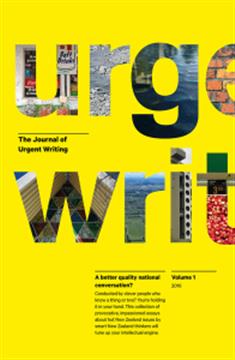 .. .....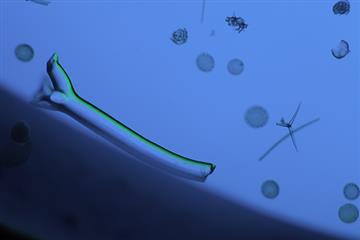
A portfolio of 16 images from Wayne Barrar’s project, The Glass Archive is included in the first issue of the Journal of Urgent Writing published by Massey University Press.

RIM BOOKS
LINK ..
Rim Books is an independent publishing house run by artists, established in 1996 in Auckland, New Zealand, to promote publication of high quality photographic /art /craft/ art history and theory books, that are not likely to find more commercially orientated publishers..

CLOUDS is a small publishing house involved in the publication of art books in Aotearoa New Zealand.
We are Warren Olds, Gwynneth Porter, Bryn Roberts, Jack Hadley, Andrew Kennedy. Clouds is based in Newton, Auckland.
We are primarily interested in increasing the supply of interesting tomes and slimmer volumes both about and by artists.
Anne Noble
Anne Noble, one of Aotearoa New Zealand’s most preeminent photographers, set her sights on Antarctica early in the 21st century, undertaking three missions there and making a world tour of Antarctic centres in parallel. She made three bodies of work, one of which, Ice Blink, forms the basis of this major volume. It sets imagery taken in Antarctic centres, aquaria and museums that study Antarctica with photographs of human encounters with the icy continent and the Antarctic imaginary. Ice Blink features an essay by acclaimed essayist and novellist Ian Wedde.
Edited by Gwynneth Porter
Essay by Ian Wedde
Published by Clouds
December 2011
ISBN: 978-0-9864628-5-6
Hardcover
124 pages
63 Colour plates
Edition: 1000
Dimensions: 227 x 283 x 17 mm
REVIEW:
Afterimage LINK
 .LILINK
Publishing fine art photography books
Contact printing LODIMA FINE ART™ Silver Chloride Paper LINK
Advances in Archival Mounting and Storage LINK
Peter Black The Shops
A portrait of New Zealand shops - disappearing, said, beautiful, comic, lonesome, dirt poor, rich in spirit - by writer Steve Braunias and photographer Peter Black. In 44 colour images and an essay that combines intensely personal memoir with reflections on how the online and stripmall revolution has created ghost towns. (Steve Braunias)
250 x 210mm, hardback
44 colour plates
Design by Katrina Duncan
Published by Luncheon Sausage Books
REVIEW
EyeContact Peter Ireland
Ben Cauchi The Evening Hours
ISBN: 9780864738387
The Evening Hours brings together new writing on Cauchi’s practice with reproductions of over eighty of his photographs. The artist has played an active role in this process, returning to his own archive just as he trawls through photographic histories to select, re-present and sequence a decade of work.
Aaron Lister is Curator New Zealand Art at City Gallery Wellington
Geoffrey Batchen teaches the history of photography at Victoria University of Wellington
Glenn Barkley is a curator at the Museum of Contemporary Art (MCA), Sydney
Hardback
A4
128 pages
80 full-page plates
Fiona Pardington The Pressure of Sunlight Falling
Edited by Kriselle Baker & Elizabeth Rankin
OTAGO UNIVERSITY PRESS
Co incides with exhibition at Govett - Brewster Art Gallery:
Photographs of casts of Maori, Pacific and European heads, including casts of her Ngai Tahu ancestors, made by Pierre-Marie Dumoutier 1837-1840.
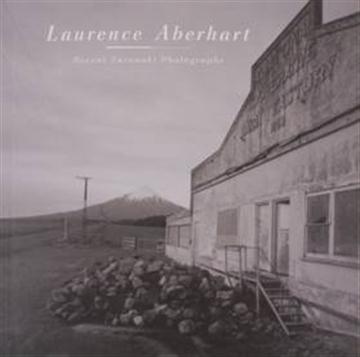
Laurence Aberhart: Recent Taranaki Photographs
This publication is published to accompany the Govett-Brewster Art Gallery exhibition of the same name.
All works from Laurence Aberhart: Recent Taranaki Photographs are reproduced, accompanied by earlier Taranaki works produced by the artist and held in the Govett-Brewster Art Gallery Collection.
Laurence Aberhart’s photographs are among the most respected and memorable artworks produced in Aotearoa New Zealand over the last four decades.
In Recent Taranaki Photographs, Aberhart is absorbed in capturing the architecture and landscapes that we may barely notice or see ourselves. His black and white photographs explore the land we inhabit and the memories embedded in the relationship between natural and built forms.
A long term visitor to Taranaki over the course of his career, Aberhart acknowledges his love of the region and his determination to produce new works in a landscape that constantly intrigues.
Three new essays are presented alongside a recent interview conducted with the artist by Govett-Brewster Director Rhana Devenport. Ron Lambert explores the stories and connections between Aberhart’s photographs and the landscape they record. Assistant Curator Len Lye, Paul Brobbel reconsiders the prevailing view of Aberhart’s photographs as works of melancholy while Peter Ireland explores the notions of ‘truth’ and ‘beauty’ in Aberhart’s photography.
Available for purchase at the Govett-Brewster Art and Design Shop and selected book stores.
Published by Govett-Brewster Art Gallery
September 2012
ISBN: 978-0-908848-53-9
Paperstock: Mohawk Superfine, New Silk Matt
69 pages
6 colour images, 44 black and white images
Edition: 400
Dimensions: 230mm x 230mm
REVIEW: Landfall Review Online - Max Oettli, 01 August, 2013
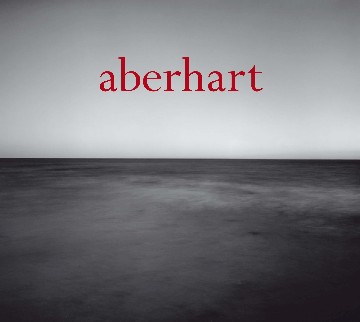
LAURENCE ABERHART has come to occupy a singular position not only within the world of New Zealand
photography, but also within the wider visual arts culture.
His images—like those of Eugene Atget and Walker Evans, two presiding spirits in the Russell darkroom—gain
resonance with each passing year.
GREGORY O'BRIEN
A GREAT PHOTOGRAPH is like an underground tunnel, linking histories that seemed to be separate. Aberhart's
extraordinary achievement has been to create photographs that carry the intimacy and urgency we associate
with certain scenes from our own family albums. In the last two decades, he has widened the focus of his art
without diminishing its intensity, moving from the rites and intimacies of his immediate family out into those of
the wider culture—an album encompassing, as he put it in an eight-word manifesto from 1985, ‘My family, my
country,
my head, my heart.'
JUSTIN PATON
LAURENCE ABERHART has been at the forefront of New Zealand photography since the late 1970s, and is
recognised as a major international figure. Like the paintings of Colin McCahon—an artist with whom Aberhart
is frequently paired—his photographs are a sustained meditation
on time, place and cultural history.
They are also virtuoso pieces of photographic craft.
This book is a landmark in New Zealand art publishing. In a definitive overview of Laurence Aberhart's work to
date, 235 full-page reproductions of iconic photographs of churches, marae, cemeteries, Masonic Lodges and
other subjects are accompanied by illuminating essays by leading New Zealand art writers Gregory O'Brien and
Justin Paton. O'Brien pursues the motif of the horizon through Aberhart's work, considering the many journeys
that his career encompasses and the shelters and structures seen along the way, while Paton focuses on the
human presences that quietly animate Aberhart's extraordinary body of work .
REVIEWS:
NZ BOOKS Vol 17 #4 Issue 80 Summer 2007 p14 Then and now Peter Ireland
...he'ill resolutely continue doing Aberharts to reshape our culture to the end.
...what he's doing is making images that speak to us about the now of history, the our lives bit of the spectrum.
Human endeavour is central to his project, the structures depicted are allegories teeming with human aspiration...
Even those minimal horizons are saturated with an ineradicable human longing for the limitless.
ARTBASH [exhibition]
PHOTOFILE #83 Anne Kirker, Art Consultant, Curator and Writer, Brisbane
Exhibition review: Architecture NZ No. 3 2008 May/June, page 120 - 121
The
book is available in:
Sydney
Gleebooks
49 Glebe Point Road, Glebe
02 9660 2333
Canberra
NGA bookshop
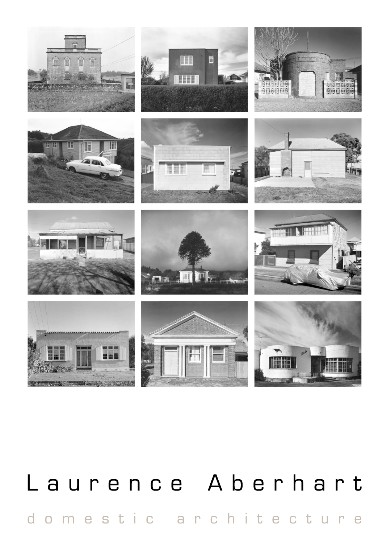
A catalogue raisonne of Laurence Aberhart's Domestic Architecture photographs 1974 – 2005
Along with N.Z. images are those from Australia , Vanuatu , Japan , China and France
This project follows on from our 2002 Aberhart exhibition & publication [with essay by Justin Paton] The Interior
ISBN
0-9582430-8-5
Published by: McNAMARA GALLERY Photography
500
copies printed; individually numbered
REVIEWS:
Architecture New Zealand, March/April 2006, p 94-5
N.Z. Home + Entertaining, April/May 2006, p 25
Architectural
Centre [Wellington] Newsletter March/April
2006
The book is available in:
New
Zealand
Unity Books, Auckland
McLeods Booksellers, Rotorua
Govett-Brewster Gallery shop, New Plymouth
Unity
Books, Wellington
Gallery Shop, Christchurch Art Gallery
Gallery Shop, Dunedin Public Art Gallery
University Book Shop [Otago] Ltd
Melbourne
Centre for Contemporary Photography
404
George Street, Fitzroy
Sainsbury's Books
534 Riversdale Road, Camberwell
03 9882 7705
Sydney
Gleebooks
49 Glebe Point Road, Glebe
02 9660 2333
Peter Peryer: Photographer
Essays by Peter Peryer & Peter Simpson
Montana New Zealand Book Award finalist
Review on RNZ National's Speaking Volumes
Peter Peryer is one of New Zealand’s leading contemporary
photographers.
As author Peter Simpson writes, ‘Peryer has over the past
three decades and more constructed a world—call it Peryerland—which
has its own distinctive typography, climate and features. Only
the best photographers are capable of such a feat’. Peryer
is also one of New Zealand’s most innovative photographers,
constantly refining and expanding his photographic practice, notably
with his embrace of digital photography from 1998.
Peter Peryer: Photographer includes a plate section of eighty
photographs, the largest body of Peryer’s work yet assembled,
personally selected by the photographer. Complementing these plates
are an engaging, wide-ranging introduction to Peryer’s work
written by Peter Simpson and an autobiographical essay by Peryer
himself, discussing aspects of his life from infancy up to the
time he acquired his first camera in the early 1970s. While
interested in doubles, pattern and repetition, problems of scale,
the surreal and the grotesque, Peryer’s work most often
focuses on the ‘thingness’ of his subjects and objects.
Here are whitebait, shells, two goats, a Meccano bus, a ‘sand
shark’, planes and a windsock, as well as a Moeraki boulder,
the trig on Rangitoto and the Alexandra clock. Rich in lovingly
examined bits and pieces, and prompting a viewer always to think
harder about their significance, this book is a quirky and intimate
guide to Peryerland.
Peter Simpson is associate professor and former head of the Department
of English at The University of Auckland. An academic, writer,
curator and publisher (for the Holloway Press), he specialises
in New Zealand literature, art history, modern poetry and post-colonial
literatures. Simpson is the author of Colin McCahon: The Titirangi
Years (AUP, 2007) and Answering Hark: McCahon/Caselberg, Painter/Poet
(Craig Potton, 1999), and has edited numerous other books.
He has been a friend of Peter Peryer’s for ten years.
ISBN 978 1 86940 417 8
260 x 240mm, paperback with flaps, 176 pages
approx, colour and b+w illustrations.
ISBN 978 1 86940 427 7
Special limited edition of 100 copies: signed
and hand-numbered.

REVIEWS:
Art News NZ Volume 29 / Number 3 Spring 2008, page 164
The National Business Review, Life seen through a differing lens John Daly-Peoples NBR review
...to...concentrate the image.
Art New Zealand Number 130/ Autumn 2009 page 66 - 8 Leonard Bell
New Zealand Books Vol.19 No.3 Issue 87 Spring 2009 page 9 Peter Ireland
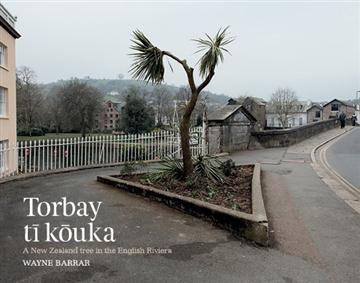
Torbay tı kouka: A New Zealand tree in the English Riviera
Photographs by Wayne Barrar
In Torbay tı kouka photographer Wayne Barrar looks at how the New Zealand cabbage tree has been relocated, hybridised and utilised to redefine a new domestic landscape: the South West of England. Defying the normal direction of ecological colonialism, the cabbage tree was introduced to Britain as an exotic specimen plant in the nineteenth century. Its tropical appearance and temperate hardiness made it a natural fit for the South West into the twentieth century, particularly as the Torbay area positioned itself as a UK tourist destination — the ‘English Riviera’. The cabbage tree (tı¯ ko¯ uka, Cordyline australis) now appears extensively through the South West. It is so closely identified with the area that, as the ‘Torbay palm’, it is one of the area’s key promotional symbols, and it is often presumed to be a native English plant. Wayne Barrar’s photographs begin by positioning tı kouka at home in New Zealand, before going on to consider the plant in this new setting. The work extends his long-term interest in the way people alter their environment, expand the limits of nature and live in increasingly constructed landscapes. The photographs are accompanied by essays by New Zealand writers Philip Simpson and Peter Simpson, outlining tı kouka’s botanical, ecological, and cultural histories.
Wayne Barrar, Associate Professor at the School of Fine Arts, Massey University, is a photographer whose work has been widely exhibited in New Zealand and internationally.His books include Shifting Nature (Otago University Press, 2001) and An Expanding Subterra, published in 2010 by the Dunedin Public Art Gallery in association with his currently touring exhibition.
WITH ESSAYS BY:Peter Simpson and Philip Simpson
FOREWORD BY: Liz Wells
PUBLISHED BY:University of Plymouth Press
WITH THE SUPPORT OF:College of Creative Arts Massey University
December 2011
I
SBN 9781841022970
64 pages plus one gatefold
Softbound 200 x 240mm.
REVIEWS:
EyeContact John Hurrell review
Art New Zealand No. 142 p52 - 55
Richard Orjis PARK
Text by David Eggleton and Harry McNaughton
ISBN 978 0 43 18311 0
220 x 275 mm / 100 pages
Hard cover / cloth bound
This publication has been made possible with the generous support of the Research, Development and Technology Transfer Fund of Manukau Institute of Technology, Te Whare Takiura o Manukau
REVIEWS:
TheDenizen LINK
Art New Zealand No. 142 p56 - 59
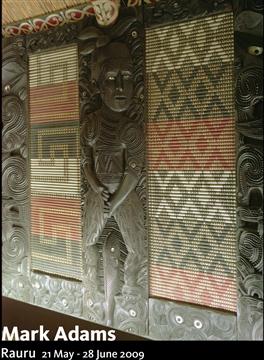
Rauru: Tene Waitere, Maori Carving, Colonial History
Over the last ten years, in collaboration with anthropologist
and historian Nicholas Thomas,
Mark Adams has tracked the carvings of Tene Waitere (1854-1931)
in New Zealand, Germany, and Britain.
Mark Adams, Sean Mallon & Nicholas Thomas
Tatau: Samoan Tattoo, New Zealand Art, Global Culture
Building on an international exhibition called Tatau, a series of photographs is being published that documents the story of Samoan tattoo.
Tatau: Samoan Tattoo , New Zealand Art, Global Culture is published by the imprint of New Zealand 's national museum, Te Papa.
Containing 75 full-colour plates, the photographs by documentary photographer Mark Adams look particularly at the work of tufuga (tattoo artist) Sulu‘ape Paulo II, and pose questions about the Samoan tattooing scene and
its history. The photos are accompanied by two essays and interviews with both Adams and Sulu‘ape.
An ancient Polynesian art tradition and rite of passage that reaches its most powerful expression in the full body male tattoo, the pe‘a, tatau was first adopted by early European sailors exploring the Pacific hundreds of years ago. Since then, it has flourished among Samoan migrants in Auckland , stimulated major New Zealand artists, and inspired tattooists and tattooing communities worldwide. Paulo was a pre-eminent figure of modern
Samoan tattooing until his death in 1999. Brilliantly innovative and often controversial, he saw tatau as a great Polynesian tradition and also as an art form of international importance.
This new book acts as a record of his practice, and that of other tufuga ta tatau, for all to see.
Mark Adams is a documentary photographer whose work has been extensively exhibited and published. Adams 's photographs appear in Land of Memories (with Harry Evison,1993) and also Cook's Sites: Revisiting History (1999) and Rauru: Tene Waitere, Maori Carving, Colonial History (2009), both with Nicholas Thomas.
Sean Mallon is of Samoan and Irish descent and is Senior Curator Pacific Cultures at Te Papa. He is the author of a number of publications on Pacific art, including Samoan Art and Artists (2002), Pacific Art Niu Sila: The Pacific Dimension of New Zealand Arts (2002), Speaking in Colour: Conversations with Artists of Pacific Island Heritage (1997) and is co-editing the forthcoming Tangata o le Moana (Te Papa Press, 2011).
Nicholas Thomas is Professor of Historical Anthropology and Director of the Museum of Archaeology and Anthropology at the University of Cambridge . He has written extensively on art and cultural exchange in the Pacific and his influential books include Oceanic Art (1995) and Possessions: Indigenous Art/Colonial Culture (1999).
Peter Brunt is Senior Lecturer in Art History at Victoria University of Wellington. He researches and writes about art in the Pacific and curated the exhibition Tatau: Photographs by Mark Adams at the Adam Art Gallery in 2003, which has been shown in galleries in New Zealand , Australia , Canada
and the UK .
Tatau: Samoan Tattoo , New Zealand Art, Global Culture with photographs by Mark Adams,
edited by Sean Mallon & Nicholas Thomas, Te Papa Press, April 2010
ISBN: 978-1-877385-55-1
RRP $NZ80.00
Wellington Streets Julian Ward
EyeContact REVIEW Peter Ireland – 24 December, 2014
the grass is awfully green
The grass is awfully green is part of Peter Black’s on-going series of photographs examining the social landscape of New Zealand. Black looks at a nation trying to balance between its past and the ideal of a 100% Pure New Zealand. The work covers images made between 2008 and 2012 throughout New Zealand.
Orders:
1. the grass is awfully green is available as a hardback book limited to 15 signed and numbered copies. One A4 image printed with Epson archival inks is also available (from a choice of six images). The hardback edition contains 81 full colour images, across 99 pages, printed on Mohawk proline pearl 190gsm paper, with a dust jacket and linen cover. Size: 33 x 28cm (13 x 11inches) Cost: with print, $NZ 300.
This edition is also available, without the print, for $NZ 250.
2. the grass is awfully green is also available as a soft cover catalogue with 22 images, printed on premium lustre 148gsm paper. Size: 20 x 25 cm ( 10 x 8 inches)
To order a book or catalogue: www.peterblackphotos.com
Frozen
The images of Frozen deal with idea of damage in New Zealand's social fabric, be it physical, psychological or economic. Using street scenes, signage and piercing details, Peter Black builds an image sequence with underlying coherence and moments that catch at the mind and heart. MORE

Neil Pardington The Vault
Working behind the scenes in museums and galleries throughout New Zealand with his large-format camera, Neil Pardington reveals the hidden collection storage spaces that are normally closed to the public.
His gathered results ( thirty-five large-scale photographs) hold a strong natural fascination as storehouses of memory or places filled with mystifying treasure.
For Pardington (K a i Tahu, K a ti Mamoe, K a ti Waewae, P a keh a ) the works signify the 'collected culture and history of those things we deem important enough to keep, and what those things tell us about ourselves'.
REVIEWS:
History of Photography
Volume 36, Issue 3, 2012
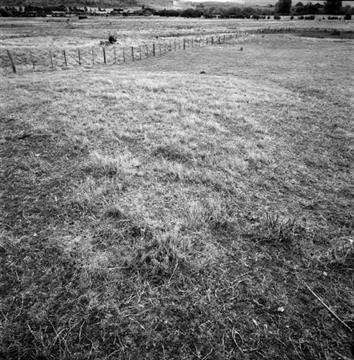
Witnessing and Untimely Images: Anne Ferran's ‘Lost to Worlds’
This article examines ‘Lost to Worlds’ (2008), a series of thirty photographs by the contemporary Australian artist Anne Ferran. The series depicts a historically significant site where there is almost nothing left to see. All that remains of the former nineteenth-century female factory are minor marks in the earth. By showing the viewer almost nothing, ‘Lost to Worlds’ raises a number of questions about what can be known or communicated about the past by photography. In particular, the traditional understanding of photographic witnessing is transformed by Ferran's subtle evocation of the history of a site by images of emptiness. The article considers the recent rise of scholarly interest in the idea of witnessing and how Ferran's series can provoke a deeper understanding of such depictions of the past.
I loved you the moment I saw you
Peter Black
With Ian Wedde
ISBN: 9780864736598
Format:Hard Back
‘Looking at the photographs in I loved you the moment I saw you has alerted me to this: to the different ways in which perception is situated, and to the laminated or layered times it takes to take that in – to be moved, to be in love, in “the moment”.’ (Ian Wedde)
In eighty-two disturbing, and compassionate photographs, extended as if across the time it takes for a baby to wake up and recognise the grandfather who is waiting with the child to cross a busy, dangerous street, Peter Black has composed one of the important photo-portraits of our time. A digital flâneur on high alert crisscrossing the complex urban landscape, Black has seen and loved the tender, sad, and often humorous details of life lived moment by moment on the streets of his home city.
Born in Christchurch in 1948, Peter Black had his first exhibition at PhotoForum in Wellington in 1979. His Fifty Photographs at the National Art Gallery in 1982 was the first solo exhibition by a contemporary New Zealand photographer there. Since then, Black has had in excess of twenty solo and a similar number of group exhibitions. His work is held in major collections in New Zealand and internationally, including The Museum of New Zealand Te Papa Tongarewa, Auckland Art Gallery, and the National Library Gallery. His photographs have been published and written about in many individual and group publications since the National Art Gallery’s 1982 catalogue Fifty Photographs, most recently in Real Fiction (Sport 30, 2003).
I loved you the moment I saw you is Black’s fourth colour portfolio.
REVIEWS:
N.Z. Herald - Peter Simpson
Photo-Eye Bookstore LINK
PHOTOGRAPHY AND AUSTRALIA
Helen Ennis
An original and compelling account of Australian photographic history, from the 1840s to the present
Contains many iconic Australian photographs, as well as many lesser-known images of and by Aboriginal
Australians, Photography and Australia focuses on those aspects of photographic practice that can be considered distinctively Australian. It argues that the colonial experience has been crucial in shaping photographers' concerns. The relationship between settler Australians and Aboriginal Australians is regarded as central with photographs of Aboriginal people or by Aboriginal photographers included throughout. Also considered are photographers' responses to place, modernity and globalisation. Images include post-mortem studies of bushrangers, wilderness photographs, documentary photographs, and some of the iconic images in Australian photographic history. The book is visually impressive, illustrated with more than 80 photographs from public collections in Australia .
Photography and Australia provides an original and lively account that will appeal to the general reader, as well
as to specialists and students in the field.
Helen Ennis is one of Australia 's leading photography historians. She was a former Curator of Photography at
the National Gallery of Australia and has worked extensively as an independent curator. Since 2000 she has curated exhibitions for the National Portrait Gallery, the National Gallery of Australia , the National Library of
Australia
and the Art Gallery of New South Wales. Her most recent publications
are the biography MargaretMichaelis: love, loss and photography (2005), which won the Victorian Premier's Literary Award
for non-fiction (2006) and Reveries: Photography and Mortality (2007). She is currently a Senior Lecturer and Associate
Head at the Australian National University School of Art.
Photography
and Australia (published
by Reaktion Publishers)
ISBN 9781861893239
Art
at Te Papa
The evolution of the national art collection is closely linked
with the story of Aotearoa New Zealand itself – its places,
its people and their passions, and its developing sense of identity.
Art at Te Papa,
a major new book from Te Papa Press, spans the Museum’s
collection – from superb early European prints to exciting
contemporary acquisitions. Te Papa’s curators have selected
more than 400 artworks, each one beautifully reproduced, and accompanied
by an engaging mini essay.
Photographers featured include:
Laurence Aberhart, Mark Adams, Peter Black, Murray Cammick, Richard Collins, Frank Hofmann, John Johns,
Anne Noble, Robin Morrison, Max Oettli, Fiona Pardington, Peter Peryer, Ann Shelton, Chrsitine Webster & Ans Westra
Art at Te Papa Standard Edtn
NZ RRP (incl. GST): $130.00
ISBN: 978-1-877385-38-4
Extent: 440 pp
Illustration: over 400 full-colour plates
Format: Flexibind, 315 x 250 mm
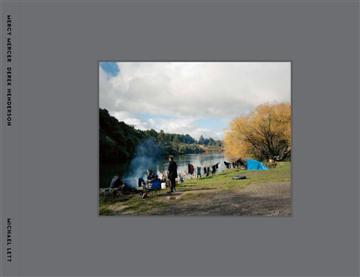
Mercy Mercer a new book by Derek Henderson
This is Henderson 's second monograph, following the release of The Terrible Boredom of Paradise in 2005
[see: below]
From abandoned rural New Zealand landscapes to the residents of the alternative communities, from Maori teenagers and workers at the Waitoa Slaughterhouse to fashion models and intimate moments from private life, Henderson's varied subject matter is united by an approach marked by a kind of democratic naturalism, where all phenomena, no matter how insignificant or commonplace, is given equal attention.
Although variously described as anti-heroic and anti-iconic, Henderson 's interest in the ‘ordinary' can be deceptive and his narratives often reveal themselves to be more complex and unsteady than they first appear.
Mercy Mercer's 128 colour photographs of the Waikato river, its neighbours, travelers - typically ‘ New Zealand ' in flavour - are punctuated by unexpected moments that tell unofficial stories of New Zealand ;
tales of colonial invasion, poverty, immigration, boredom, and the ecological degradation of the landscape at the hands of commerce.
Mercy Mercer is a cloth-bound, hardcover book featuring128 colour photographs and a foreword by Jan Bryant, Head of Research at AUT School of Art and Design.
Mercy Mercer
Derek Henderson
ISBN 978-0-9582831-4-4
Foreword by Jan Bryant
Design by Fabio Ongarato Design
140 pages, cloth casing
152pp, section sewn
128 colour illustrations
printed on Magno Satin matt artpaper and AA woodfree
cloth-bound with matt black foil blocking on spine, blind debossing on cover
REVIEWS:
PhotoEye LINK
Art New Zealand #135/Spring 2010 p74 – 5
Wayne Barrar An Expanding Subterra
Published by Dunedin Public Art Gallery
This comprehensive publication traces Barrar's major photographic project depicting commodified mined spaces and uncanny architecture of the underground. Barrar worked on this portfolio for more than seven years taking in commercial, industrial and domestic spaces in New Zealand, Australia, France and the United States of America.
This book provides a thorough account of this significant photographic project, which is also accessible over the coming 18 months as a touring exhibition.
Aaron Kreisler, curator and editor of Wayne Barrar: An Expanding Subterra, notes:
‘This is a stunning publication that will finally bring these works the attention that they deserve. Wayne plotted a photographic course a number of years ago that he has assiduously stuck to and the results are spellbinding – I have no doubt that people will be stunned by the elegance, mysteriousness and scale of this project. Wayne is the type of artist who goes about his business ‘off camera' and when you finally get the chance to see what he has achieved it is overwhelming – this publication shows that his work is operating at an international level.'
Book specifications:
ISBN: 0-908910-59-2
Pages: 128
Plates: 84
Texts: 2 major essays by Dr David L Pike, Looking Underground
and Aaron Kreisler Ground Control, an artist biography and selected bibliography.
Binding: hardcover case bound with dust jacket
Retail price: $55.00
The publication was printed with the assistance of Creative New Zealand and Massey University.
An Expanding Subterra has won a top award in the Museums Australia MAPDA book awards in Perth.
It was an overall winner in the Exhibition Catalogue (major) section.
REVIEWS:
Spare Roon LINK
Elsewhere LINK
Otago Daily Times LINK
EyeContact LINK
US Lens CultureLINK
The Lumiere Reader LINK
Afterimage LINK
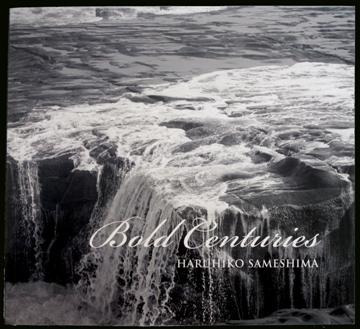
Bold Centuries: Photographic History Album
Haruhiko Sameshima
Haru arrived in New Zealand in 1973 knowing the country only from his father's photographs, postcards and picture books. “ Bold Centuries is my attempt at placing photographs in an open narrative, collected as a photographer and as a consumer of this image culture.”
With essays by: Kyla Macfarlane, Ingrid Horrocks, John Wilson,
Tim Corbalis, Aaron Lister, Damian Skinner and Claudia Bell
ISBN 9780473144821 (pbk.) 2009
Satin laminated paper back cover plus 196 pages. 220mm x 240mm.
illustration 4 colour spot varnished throughout as well as duotone
black and white on 175 gsm matt art paper. Approx 930gms
1st edition 1000 copies
RRP $59.95 inc.GST
REVIEWS:
Sightseeing
an exhibition and publication of postcards that explores the representation of place in contemporary German and New Zealand photography
Sightseeing with Mark Adams, Fiona Amundsen, Karin Apollonia Müller, Wayne Barrar, Frank Breuer,
John Di Stefano, Jeremy Diggle, Elger Esser, Doris Frohnapfel, Eva Leitolf, Anne Noble, Haruhiko Sameshima, Sarah Schönfeld, Grit Schwedtfeger & Ann Shelton
An exhibition where postcards literally are the exhibition.
It links New Zealand and German photographic artists through a curated exhibition that engages contemporary discourses of globalization and exchange.
The Sightseeing blog is an open, experimental format for research and exchange of ideas around the project.
McNamara Gallery hosted this touring exhibition in July 2011
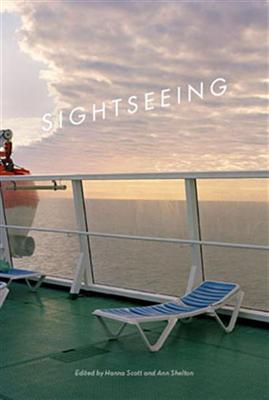
Ferry crossing, Melilla to Almería, Mediterranean , 2009, © Eva Leitolf.
SIGHTSEEING - the book
Includes photographs by Mark Adams, Fiona Amundsen, Karin Apollonia-Müller, Wayne Barrar, Frank Breuer, Jeremy Diggle, John Di Stefano, Elger Esser, Doris Frohnapfel, Eva Leitolf, Anne Noble, Haruhiko Sameshima, Sarah Schönfeld and Shmuel Hoffman, Grit Schwerdtfeger, and Ann Shelton.
Massey University School of Fine Arts Photography Research Cluster is pleased to announce the launch of Sightseeing: a publication of postcards that explore the representation of place in contemporary German and New Zealand photography.
Edited by Ann Shelton and Hanna Scott. Essays by Esther Ruelfs and Hanna Scott
Published 2010 by Rim Books, Auckland
A unique format publication, SIGHTSEEING is packaged in a box set and includes 90 colour plates in the form of postcards. It is published in both German and English.
ISBN 978-0-473-16560-5
Crombie To Burton Early New Zealand Photography
Published by Michael Graham-Stewart in association with John Leech Gallery
Text by John Gow and Michael Graham-Stewart
Soft cover, 80 pages, 210 x 270 mm
ISBN: 978-0-473-16539-0
Crombie To Burton Early New Zealand Photography is a catalogue publication that illustrates the work of photographers in nineteenth century New Zealand . Researched and written by Michael Graham-Stewart and John Gow, this publication documents in imagery the colonial period of New Zealand's past and includes photographs such as the Wrigglesworth and Binns image of the 1883 Auckland touring team and a rare ambrotype by John Crombie of Tamati Waka Nene.
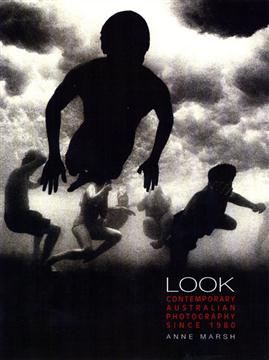
LOOK ! Contemporary Australian Photography
Dr Anne Marsh
Published by Macmillan
Representing over 190 artists, Look is the largest book ever published on Australian contemporary photography. Surveying and recording the significant historical changes to the art of the photographic image and process. The publication analyses the curatorial and critical issues that have contributed to photography over the last 30 years, through a key selection of critical essays accompanied by a timeline detailing important exhibitions and events, and an extensive bibliography.
This glossy publication is grouped together in themes, creating a strong dialogue across identity, life, experiment, space, and environment with sub themes including icon, desire, performance, abstract, inhabitants and land.
Artists include, Bill Henson, Julie Rrap, Tracey Moffat, Brook Andrew, Pat Brassington, Anne Ferran, Destiny Deacon, Sue Ford, William Yang, Jane Burton, Petrina Hicks, Simryn Gill, Ray Cook, and more.
The collection of works represents an extensive five years of research and two years of production collated and compiled by one of Australia’s most important national academic researchers Professor Anne Marsh.
Recognised for her ongoing work in this field, and for several earlier publications, including, "The Darkroom: Photography" and the "Theatre of Desire" published by Macmillan in 2003. Anne Marsh has undertaken a rigorous curatorial selection process to present both an intellectual and visual examination on the photo aesthetic.
Dr Anne Marsh is Professor of Theory in the Faculty of Art & Design, Monash University . Her books include Pat Brassington: This is Not a Photograph (2006) and The Darkroom: Photography and the Theatre of Desire (2003).
The research for LOOK ! was supported by an Australian Research Council Discovery Grant and a New Work Grant from the Australia Council for the Arts.
ANS WESTRA: Private Journeys/ Public Signposts screened in the Telecom International Film Festival & on
TNVZ in 2006.
The DVD of this 72min documentary is now available & will retail for $39.95rrp, wholesale $26.95.
ANS WESTRA: Private Journeys/ Public Signposts
Ans Westra, whose photographs of New Zealanders constitute a uniquely expressive record of who we are
and have been, now sits for the camera herself. Contemplating her career with amusement and gratitude, she
speaks as one for whom photography is as natural and indispensable as seeing or remembering. Luit Bieringa,
first-time filmmaker and curator of the superb touring retrospective, intercuts her testimony with cordial
interjections from friends, family and other well-informed admirers - and shows us the photos. Drawn to big
public occasions, she's rarely interested in big public figures. Her images are captured at the peripheries of
official activity and are all the more piquant for that. Framed by a conversation with Hone Tuwhare, the film
roundly acknowledges the progressive role her work played in 60s counterculture and in the cultural renaissance
of Maori.
This 72 minute documentary is the extended festival version of Luit Bieringa's film, commissioned by TVNZ and
joins in celebrating a great New Zealand image-maker.
Please advise if you would like more information. Jan Bieringa jan@bwx.co.nz . 04 385 9435 or 027 535 7370
Jocelyn Carlin Every Picture Tells a Story
Square format, 240 pages, hard cover
ISBN: 978 0 90868 992 7
Every Picture Tells a Story is a documentary of what’s been important in Carlin’s life, her photographic career and in the lives of those around her in New Zealand, across the Pacific and in surprising places throughout the world. The book encompasses single images and parts of projects, supported by text where Carlin feels there is more story to be told. Themes include New Zealand art, film, performing arts, landscapes and environments.Carlin extensively illustrates the impacts of global warming on low lying Pacific nations, their struggles against colonisation and their approaches to survival.
The pictures and the stories are punctuated by excerpts from public presentations, interviews and writings which reveal much about Carlin’s politics, her passion for social justice and a lifelong love affair with her camera.
The first instance sales and distribution will be handled by me and by Neil Hannan: neil@neilhannan.com
Contemporary
New Zealand Photographers
Laurence Aberhart Mark Adams
Fiona Amundsen Wayne Barrar
Peter Black Ben Cauchi Marti
Friedlander Darren Glass Gavin
Hipkins
Anne Noble Fiona Pardington
Neil Pardington Peter Peryer
Edith Sagupolu
Ava Seymour Marie Shannon
Ann Shelton Deb Smith Yvonne
Todd Boyd Webb
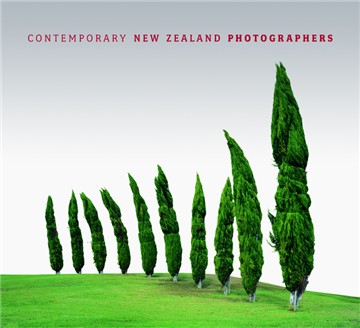
published
by Mountain View Publishing distributed by Craig Potton Publishing
sales@cpp.co
REVIEWS:
Photofile 78 Spring 2006, p78 Anne Kirker
Derek Henderson The
Terrible Boredom
of Paradise
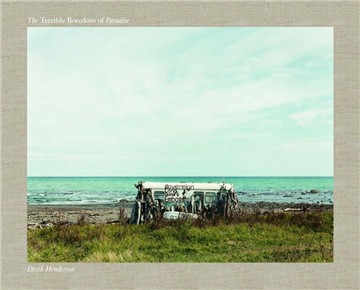
REVIEWS:
Art News New Zealand Vol 25 #3 Spring 2005, p86
D
- Photo #7
August/September 2005, p9
photoeye booklist, Winter 2005, p31 Darius Himes
Photofile 77 Autumn 2006, p79
NOTES
Print Types
See:
GRAPHIC ATLAS LINK
for print identification and distinguishing characteristics
.... ..V & A Photographic Processes LINK
Printing-out paper [P.O.P.] is a commercially manufactured paper coated with silver chloride emulsions designed to develop a print from a negative by using light alone, rather than developing using chemicals.
The negative is placed in contact with the sensitized paper, exposed to light [daylight or strong electric light], and the image would then appear spontaneously. The print is then toned [with gold salts], fixed and washed. These papers were quite popular from the 1880s until the late 1920s. The advantages of the gelatin [sometimes collodion] printing-out papers, over earlier albumen paper, was the variety of surfaces, warm image tones, contrasts, and better image stability.
Atget
used this process in his exhaustive documentation of Paris.
The process for making platinum prints was invented in 1873 by William Willis (1841-1923), thirty-four years after Louis Daguerre in Paris and William Henry Fox Talbot in London presented the discovery of photography to the world.
However, Sir John Herschel & Robert Hunt had observed the action of light on platinum salts as early as 1832 and 1844 respectively. Willis continually refined the process until 1878, when commercially prepared platinum papers became available through the Platinotype Company he founded.
Unlike the silver print process, platinum lies within the paper surface, while silver lies in a gelatin or albumen emulsion that coats the paper. As a result the final platinum image is absolutely matte with a deposit of platinum absorbed slightly into the paper, and has the texture of whatever paper was used.
The process depends on the light sensitivity of iron salts. A dried sheet of paper, sensitized with a solution of potassium chloroplatinate and ferric oxalate, an iron salt, was contact printed under a negative in sunlight (or another source of strong ultraviolet light) until a faint image was produced by the reaction of the light with the iron salt, forming ferrous oxalate. The paper was developed by immersion in a solution of potassium oxalate that dissolved out the iron salts and reduced the chloroplatinate salt to metallic platinum in those areas where the exposed iron salts had been. An image in platinum metal replaced one in iron. The paper was washed in a series of weak hydrochloric or citric acid baths to remove remaining excess iron salts and yellow stains formed in the earlier steps. Finally, the print was washed in water.
Metallic platinum is one of the most stable substances known, and as such the prints are as permanent as their paper base.
Platinum prints were popular until the1920s , when the price of platinum rose so steeply as to make them prohibitively expensive They were in part replaced by the somewhat cheaper palladium prints, the process for which was very nearly the same.
Both
processes were valued for their great range of subtle tonal variations,
usually silvery grays, and their permanence.
Salt prints were the earliest positive prints and were invented by William Henry Fox Talbot in 1840, as a direct development from his earlier photogenic drawing process. A salt print was made by soaking a sheet of paper in common salt solution and then coating one side with silver nitrate. This produced light sensitive silver chloride in the paper. After drying, the paper was put, sensitive side up, directly beneath a negative, under a sheet of glass in a printing frame, and exposed to sunlight until the contact printed image reached the required intensity [up to two hours]. It is then fixed with sodium thiosulphate [‘ hypo’], then washed and dried. The print could be toned with gold chloride for greater permanence and richer tone. Prints are reddish brown in colour and have a matte surface, the image/silver salts appearing to be slightly embedded in the paper. Its highlights are usually white. Salt prints were made until about 1860 having been gradually replaced by the albumen print [1851] which gave a clearer image although the process was sometimes revised later.
Conservation advice
The LIFE EXPECTANCY / STABILITY of photographs depends on: the type of photographic process, how well they were processed, and the way in which the photographs are stored [light exposure {can be reduced significantly by UV-protective ‘conservation glass'} humidity {aim for relative humidity of 30 – 50%}
and temperature {maximum no more than 18 - 25° and temperature variation of = 4°}] and handled.
Unframed prints 28 x 36cm or greater, should be stored horizontally rather than vertically, in stacks not exceeding 5cm high.
Simple measures for reducing light exposure include: drawing curtains & turning off lights [when room is unoccupied] and rotating displays so no single photograph remains on display on a permanent basis.
From the time of its production a photograph undergoes change.
Factors influencing such change include: whether it is an analogue or digital print, pigments or dyes used
[& compatibility between these and the paper type], paper used, chemicals /toners employed, and
support materials [especially acidity levels {aim for pH between 7 – 8.5}, adhesives used and metal-expansive properties]. Colours may change [fading or colour shift] and black & white photographs may develop yellowing, microspots, silver-mirroring or cracking. Agents used for spotting photographs may also fade.
For further detail refer to: www.wilhelm-research.com
The Permanence and Care of Colour Photographs … by Henry Wilhelm, 1993
An introduction to the editioning of photographs
This text, which should be seen as a discussion paper, will be reviewed periodically [last revision: 9.9.19]
It has been discussed at public forums in Auckland [Webb's Auctions July 2008] & Melbourne [Centre for Contemporary Photography, March 2009] and there was no significant dissension to the notions put forward.
My background in science and medicine engenders in a keen interest in clarity and precision. It is also my understanding that potential collectors of photographs appreciate this approach; it is anticipated that it may circumvent problems further down-the-track.
Paul
McNamara
B.Sc[Hons], MB. ChB
McNAMARA GALLERY Photography
Though a discussion paper, one can be categoric about some points:
1. The multiple nature of photography should be celebrated, despite
market pressure to limit editions.
2. Each photographic print should be uniquely identifiable; either
by numbering or editioning of prints.
Absolute clarity is required [see below: Fair Trading Act 1986]. Editions can
be closed [indicated by a
....fraction] where the number of prints
to be produced is nominated at the outset, or open, consisting
of .... ....sequentially numbered prints.
3. Artistic freedom should be nurtured.
4. The provenance of photographic prints is particularly important.
Historically, the monetary value of an artwork was determined
by rarity as well as aesthetics, which raises interesting tensions
with photography’s innate capacity for endless reproduction.
Some see editioning as contrary to the nature of the medium, and
purely a marketing phenomenon. In the U.S.A., before the period:
1960s – 1980s, editioning was unnecessary because no one
was buying photographs in large quantities, and photographers
printed on demand. Frequently actual print numbers from the era
are unknown, but it is often rare to find more than say 5 copies of
any one image. This is also the likely number in NZ. When working
with material from the 1960s – 1980s I endeavour to ascertain
the actual number of prints made from each negative. This is reflected
in the pricing of prints. In the U.S.A. the word edition
was not applied until after 1972-3.
New York dealer Lucy Mitchell-Innes, who ran the contemporary-art
department at Sotheby's in the 1980s, has recently observed that
the multiple nature of photographic prints no longer bothers collectors.
"People now want to own pictures that other people own,"
she says."That's a major shift…." However, this
is not just a contemporary observation. Ansel Adams’ Moonrise
over Hernandez is notable as a work that held the highest price
paid for a photographic print in the 1970’s for a very long
time. The fact that there were hundreds of examples of it in existence
didn't seem to have deterred the price from being set at the time.
The Age art critic Robert Nelson said the fact that there might
be multiple copies of a photograph was no different to multiple
editions of Rodin's sculptures or Rembrandt's prints. Describing
[Jeff] Wall as a "very significant artist", Nelson said
photography was finally being recognised for doing what no other
medium could do.” [Raymond Gill The [Melbourne] Age
16.12.06]
With the move to digitally produced images, the growth in the
market, and the potential for endless identicals, the desire for
artificial limitation [i.e. editions] has intensified.
“As much contemporary work is now printed mechanically from
digital files, it has been said that in a crude way the act of
editioning is the residual mark of the artist “[Sally
Breen, Photofile #77, 2006]
‘Mixed-media’
This discussion distinguishes between aspects of analogue [hand (made) prints] and digital practice. However, a good number of artists combine these modalities.
A film negative/transparency is often scanned and the digital file ‘enlarged’ [various trade names are applied to this] by computer. This file (which may be photo-shopped) is then printed as C-type [Chromogenic on photographic paper] or pigment / inkjet [digital] prints. Digital files can also be printed directly as C-type. The paper type is generally specified.
In the last two decades, questions related to the multifaceted nature of the photographic object have generated research about the appropriate vocabulary used to describe photographs; a necessity to define a photographic vocabulary that would precisely describe photographic objects.
My policy has always been to leave the issue of editioning
to the artist, as part of their expressivity –
for how long & how widely they wish a particular image to
be in circulation, prior to releasing their next work, andthereby
maintain a creative momentum and dialogue with their audience.
As photography is a multiple medium, the past remains within the [photographer’s] present. Once a photograph is exhibited, published or sold, its credentials are culturally established. Artists frequently re-evaluate their work. Should an artist decide to revise a photograph’s title on a later print, it is my opinion that the original title should follow the revised title [in brackets]. Also, a revised printing methodology should not be seen as undermining or overwriting what has gone before. A photograph’s contribution to an artist’s history is important and this can not be ‘re-written’ or retracted. An artist's history/back catalogue [as with all aspects of life] is essential to understanding the present. I appreciate that many artist's focus is on their current/up-coming work. For an artist to ‘deny’ an earlier photograph’s on-going ‘existence’ is not valid. In particular, this can undermine current work & would be unsettling to anyone who has collected [or plans to collect] the artist’s work. The only solution, for an artist who feels strongly about a photographs re-evaluation, is for them to gift the preferred new version as replacement print to all those who have purchased the original print.
A hand-printed analogue photograph, crafted one print at a time,
may be better characterized as a ‘multiple
original’. Each print, when viewed alongside
others from the same negative, is recognizably though subtlety
unique in most cases. However, it can take a very experienced
eye to assess the technical ‘quality’ [and ‘value’]
of a particular print. This notion, of the ‘multiple original’,
is reinforced by identifying each print accurately.
As anyone who has spent time in the darkroom will know, the ‘infinite
reproducibility’ of analogue photographs
is something of a fiction; the medium is self-limiting because
of the effort and time required to produce a fine photographic
hand print. The number of prints made from a negative
is generally limited by demand for a particular image. If there
is a high level of demand for an image at the beginning - in other
words it is popular - then print numbers will be higher than for
another image. In the case of open editions the collecting public
does not know when the artist will actually stop making more prints
of a particular image.
With analogue cameras, film, paper and chemicals presently becoming something of an endangered species, print supply can stop abruptly. I am now of the opinion that 'material supply' is the limiting factor in analogue print edition size, and we should dispense with 'artificial' limitation, and allow demand to be the prime determinant.
In the last decade, analogue photography has become the nearly exclusive preserve of artists and high-end professional photographers, and the business empire that analogue-based photographic manufacturers ruled over has crumbled. [Hamish Tocher, artist, 11.11.09]
However, with closed editions, one will know in advance just how many prints are available. Popular images from an open edition[that eventually closes] will of course remain in demand in the secondary market and thereby attain a degree of rarity. Conversely, a less popular image from a closed edition may always remain available and be less rare. In other words, the ‘value’ of a specific image is not necessarily related to the quantity of prints made.
When
an artist decides on a fixed edition size for their work, this
tends to imply an even public response; however, there is a highly
variable response to images, with some being popular and others
not.
When a favoured image sells out quickly this can result in a thwarted
public response.
George Eastman House, the worlds oldest museum of photography, established in 1947 and Image Permanence Institute have established a Center for the Legacy of Photography to collect and share knowledge about 19th and 20th century photographs, to examine the importance of understanding the material nature of photographs and ensure their uniqueness as a fine art and visual communication medium. There is a need to understand and define the ways in which the material nature of silver-halide photographs [chemical technology using lightsensitive silver emulsions] differs from that of digital images and to make clear that the preservation and interpretation of the two pose distinctly different challenges. Changing the materials, working methods, and the aesthetics of photography have altered in profound and lasting ways, and highlight how its specific technical characteristics are intrinsic to its aesthetic qualities .The Centre will inform the appreciation of photographs through a materials-based art history that unifies the technical and aesthetic understanding of photography.
If the artist does choose to limit the edition, which has became
common practice since the 1980s, the negative is retired [but
rarely destroyed] once the nominated edition has been printed;
though the whole edition is often not printed all at one time.
Some photographers like to print the edition in stages so that
they can interpret the negative differently, use different papers,
or take advantage of newer technologies. Also, if demand is slow,
the whole edition may never be fully realized. Also, some artists
may decide to 'kill' the edition before it is fully realised.
Conversely,
with a popular image, when the finite [limited] edition sells
out interest can be deflected toward other images by the artist.
Limited supply can, therefore, drive interest toward an artist’s
entire body of work.
The term edition should not be used retrospectively,
rather the print number, or an estimate of this.
Included in this calculation should be a list of works held by public collections.
When an artist decides to produce a finite / limited edition of an image that was previously non-editioned, then the new prints could be annotated, for example, with: Edition 2/10 [c. 12 earlier non-editioned prints exist]
Print-to-print variation, of the same image, can of course also
be present with digitally produced photographs.
Again the artist may change the final appearance of an image from
the original digital file, or printing technology or paper stock
may change.
My recommendation on editions is
one sequentially numbered [as produced]
edition of prints for each
image which may
be of the same or different dimensions [dimensions
variable] and printed
using one or more
printing
techniques.
Since photographs can be printed in different sizes, there is
potential for confusion if a photographer prints an edition in
one size but later considers that a different size print can be
produced in an additional edition. My recommendation is that there
can only be one edition regardless of size.
This is now becoming a more accepted practice in NZ. It is
clearer to collectors and the artist remains free to
vary the image size as the edition sells.
If different sizes are to be available within the nominated edition they should be announced at the beginning.
If there
are more than one printing medium [print type, method or foramt]
I believe it is best to keep these within the image edition,
but to specify on the print, and in any documentation, the print
type and the number of prints produced of this type.
It is my
recommendationto price work with little or no differential
according to size. I favour a single [image] price with any required
differential based on scale to be in accord with production costs.
Large works can be more difficult to frame [from a conservation
perspective] and more difficult to accommodate in domestic environs.
Also, with size-variable limited editions even if a collector opts for a smaller print, they are still extracting a print from the finite edition.
The scale of image selected by the artist should be based only
on aesthetic considerations.
I am not an advocate for step-pricing [escalating prices that evolve over the life of the edition], however, pre-orders can attract a lower price, and of course price reviews on an artist's work will apply to remaining works within an edition. If step-pricing is employed there should be a central registry though.
My recommendation on titling and dating photographs is:
title, image /negative or digital file year, print
year, edition number*, signature [+/- artist stamp]
*e.g. 3/15, if work is from a closed / limited edition
or
print number [if it is an open edition of sequentially numbered
prints]
E.g. Repetition II 2010 / 2011/ 1/7 [edition includes 2 artist copies]
I like to see two dates on all prints, unless the prints were
all made in the same year as the negative.
When there is a considerable interval between
the date of negative production and when the first print was made some artists refine this 'two-year' dating by writing “first printing”
on a work.
When photographs are framed the information inscribed on the
print should be transcribed onto the back of the framed work.
This titling and dating information may be written on the front of the print [recto] and covered with the framing overmatt, or on the back of the print [verso] where I recommend using pencil [2B up to 6B] to inscribe the print margin thereby avoiding any risk of through-pressure on the actual image.
If an artist is deceased, this print year information informs as to whether the print was made by the artist /under the artist's supervision, or it is a posthumous print.
The term 'archival' is no longer used to express longevity / stability in International Standards, as it is interpreted variously as meaning preserving photographs ‘forever’ [unattainable] or storage materials / conditions.
One could make a case for a limited edition when photographs are:
- digitally produced pigment prints
- large and expensive to produce
- presented as albums or portfolios
- printed by a master printer, under the artist’s direction
When actual prints are large, editions tend to be correspondingly
small.
Currently ‘recommended’ edition sizes are getting
smaller[Internationally], and the range is:
[‘artists’
using photography: 3 -] 5 –10 [-25 ‘traditional’
photographers]
Note: According to European legislation, a photograph is a work of art if there are fewer than 30 copies made.[AMA (Art Media Agency) #227 12 November 2015]
Large editions in this small country of ours seem naively optimistic
in many cases.
To accentuate issues around clarity, I advise against using the term ’artist proof’. Once a photographic print is finally determined it ceases to
be 'proof' in the correct sense of the word [A trial impression of a photographic print used for making corrections before final printing] in that it is likely to be identical to the editioned prints.
It is preferable for the artist to make an edition and to
retain artist copies / prints from the edition. [eg one artist copy* &
one artist estate copy] In other words, the edition includes
any designated artist copies / prints; the stated edition is finite
and purchasers know just how many prints are produced and how
many are for sale.
Clarity concerning editioning of photographs, as with other goods, is enshrined in New Zealand Law:
Fair Trading Act 1986 LINK
The Act prohibits misleading representation about print numbers.
Section 10 Misleading conduct in relation to goods:
No person shall, in trade, engage in conduct that is liable to mislead the public as to the nature, manufacturing process, characteristics, suitability for a purpose, or quantity of goods.
Section 13 False or misleading representations:
(a) make a false or misleading representation that goods are of a particular kind, standard, quality, grade, quantity, composition, style, or model, or have had a particular history or particular previous use...
The Fair Trading Act prohibits people in trade from engaging in misleading or deceptive conduct or representations about goods or services. In most cases it is not relevant whether a business intends to mislead or deceive; the issue is whether the conduct is liable to be misleading. Potential purchasers are entitled to rely on any representations being made about the goods or services, including the quantities that are available for purchase. Both companies and individuals may be prosecuted for breaches of the Fair Trading Act and significant penalties can be imposed by the Courts.
Consequently any terms used to describe art works or photographs need to convey an accurate impression. If a work is represented as being “limited edition,” it is likely that that would suggest to potential purchasers that the number of copies has been restricted. Buyers of limited or numbered editions are likely to pay a premium for these so it is important that any such representations are accurate.
*Artists occasionally reserve one [or more] works in an edition
for public institutions.
Also, it can be helpful if artists reserve a print, from their nominated edition, for special up-coming exhibitions.
The term AP [artist proof] on a print or catalogue listing dose not disclose anything about the number of prints in an edition.
Prints gifted by artist, or exchanged with other artists, should come from the nominated edition.
Some of these will eventually enter the secondary market. Artist copies may eventually enter the marketplace when a family sells estate prints.
Some artists produce unsigned, not-for-sale 'work prints' [for demonstration purposes, mailing-out for viewing, etc] and these do not constitute part of the edition.To protect against any confusion later, these should be annotated Work print. Not for sale.
It has been said it is important for public collections to be
developed with a longer view and curators didn't want to feel
pushed to buy a work at its inception. They might consider a work
long after it has been made as the appropriate time to collect
it. Also, a senior curator of photography in Australia has said:
"I favour the system
where artists can provide a short term reprint for exhibition
tours if it is destroyed afterwards, and they should also be able
to provide prints for publication scanning."
The artist copy[s] of an image is expected to appreciate in value
alongside those sold from the edition.
This
may serve to circumvent the need for the more bureaucratic Artists’
Resale Right question, with regard to photography.
A vintage print is one made ‘close to the aesthetic moment’,
and is thus an object made not only by the artist [or under their
supervision] but produced, contemporaneously with the taking of
the image – say within five years.
Vintage photographs can be indicated with either a single date,
or two dates; the second date being no greater than five years.[Many
would say no greater than one or two years]. However, improved
clarity is provided by the notation of negative year/ print year
outlined above.
A vintage print tends to fetch a higher price because it reflects
best the intentions and thinking of the artist at the time the
negative was made, as well as the aesthetic of that period generally.
More recent prints from an older negative are referred to as modern
prints.
A photograph may be printed differently at various stages of an
artist’s career due to a change in the artist’s interpretation
of the negative, a refinement in printing style, changes in available
materials and improved technology. Also, another printer may be
able to produce a better result than the photographer themselves
[I always acknowledge both the photographer & printer in such
cases].
Therefore it follows that a vintage print is not implicitly superior.
Estate Prints
This text, which should be seen as a discussion paper, will be reviewed periodically [last revision 20. 3.18]
Estate prints - prints released for exhibition and/or sale following the death of the photographer.
We could also include here situations where the photographer no longer possesses testamentary capacity.
We celebrate the multiple nature of photography and a consequence is that prints can be released or reprinted following an artist’s death, a process facilitated by newer technologies. The guiding principle should be the avoidance of misrepresentation of the artist’s intentions and preservation of his/her posthumous reputation*.
One would see this as the responsibility of the artist’s Estate /Foundation copyright holder and their agents. Artists are encouraged to make a living will in regard to the management of their estate.
There are two very distinct print categories:
Prints produced during the photographer’s lifetime.
Before the period 1970s – 1980s, editioning was unnecessary because no one was buying photographs in large quantities and photographers printed on demand. Until the 1980s original prints known to be produced [or supervised] by an artist in their archive are quite frequently untitled and unsigned. It is assumed that by signing a photograph the artist is giving it personal approval. Unsigned photographs can be authenticated by the copyright holder [e.g. photograph and print by..., and signed and dated by a family member or estate representative]. There is a caveat on this in that many photographers have prints sitting in boxes which may look 'ok' to the average observer but which the photographer would never allow out into the world as tradable prints. Though the condition of prints is important this is only relevant to what is normal for a particular photographer’s work from a particular period. The question hanging over this is how to adjudicate when the photographer is deceased. Implicit in this matter is that anyone handling such prints be an ethical dealer and give due regard to the photographer’s original intent.
Prints produced posthumously
An artist may, via their will, instruct their estate prohibiting posthumous printing of their work. [see below under: Negatives, transparencies and digital files archived in public institutions]
These are prints produced posthumously from the photographer’s negatives, transparencies or digital files and not overseen by the photographer. They represent the work of two individuals separated across time. Such reprints, which can only be approved for release by the estate copyright holder [who also may be a photographer or similarly experienced], should be very clearly announced to the effect that they are not original art photographs produced and authenticated by the photographer, but reprints from the photographer’s negatives or digital files. Identifying the person printing the photographs is helpful. Interpretation of the negatives/digital files may be different to that by the photographer, for example the degree of dodging & burning, printing style, print size,
image cropping, available materials and technology, and overall aesthetic; in effect a disjunction of the image-object unison conceived by the artist. Also, an image may be one that the artist decided against releasing.
One must be mindful that posthumous prints do not become prevenanced through inclusion in exhibitions.
The negative year and print year must be recorded on the print and this information, alongside the artist’s name, with years lived in brackets, clearly establishes them as posthumous prints. Such clarity is vital*.
Editioning of such prints should acknowledge a new edition [and I favour an estimate, in brackets, of the number of original prints produced by the artist].
An artist’s intention can carry over to posthumous prints in that an image editioned, but not fully sold out in their lifetime, may form part of any posthumous print release. Also, a master printer who has worked under a photographer’s supervision during his/her lifetime may continue to make posthumous prints conversant with the stylistic attributes the artist demanded of those produced when he/she was alive. One could argue that such posthumous prints be considered as valid artist prints. Further, some regard prints produced by master printers to be superior realizations compared to those originally produced by the artist.
Computer software can retain the history of changes an artist makes to his/her digital files, therefore, it is possible that perfect representations of the last artist-overseen prints can be made, which would be exactly the same as those printed by the artist.
Conventionally posthumous prints command significantly lower values and prices than prints produced during the artist’s lifetime, and such values are largely determined by a mature photography market.
Editions can help control wildcard factors like avaricious relatives not concerned with the artist's posthumous reputation. Depositing archive negatives or digital files in public institutions may serve to deal to this issue. Editions, however, should not close-off the archive from the possibility of public gallery exhibition prints, particularly where the obtaining of loans of original prints would be too costly, or where, for conservation reasons, it is undesirable to tour original prints to public galleries without climate and illumination control. Conditions necessary to the commercial art market should not impinge on the circulation of important photographs which are part of public cultural heritage. Photography is also the illustrative medium of the 20 C - 21 C and that makes the situation quite different from fine art.
As an art gallery showing original work McNamara Gallery does not exhibit or sell posthumous prints [with the exception of including two Robin Morrison caravan prints in The Caravan, 2003]
There is a time in our lives when we like to contemplate our legacy, our contribution to the society we inhabit.Photographers should consider how their work, in all forms, will remain socially useful, accessible and retrievable over time. On discussing their archive with artists one observation sometimes emerges that no public collections has what they consider to be a representative collection of their work. The multiple nature of the photographic medium facilitates the development of such a representative collection, and we are keen to facilitate arrangements to allow an institution’s collection team to revisit and potentially reshape their holding of an artist’s work in relation to the overall direction and specificities of their collecting.
New Zealand has a dispersed ‘National Collection’ of photography archives in art galleries, museums & libraries and if we compile a inventory of these, and also devise a generally-accepted/common-principles protocol for artists/estates to follow, that would facilitate the process of approaching public institutions.
Each institution will have a particular agenda/perspective with regard to accepting an archive and they aim not to overlap with other institutions. This may result in an archive being split, with components dispersed to the most appropriate institution.
In addition to advising artists on making a living will in regard to the management of their estate, it is recommended that they regularly organize their prints, negatives, files and contextual material with the view that it may eventually be archived.
Negatives, transparencies and digital files archived in public institutions are a valuable resource for education: research, reproduction as book images, and for exhibition prints
for the host institution or loans to other institutions. There may well be no original prints of some of this material, particularly where photographers produced images for magazine and book reproduction rather than prints for exhibition and sale.
It is suggested that negatives, transparencies, digital files
and a photographer's contextual material [correspondence, publications etc] should be archived in the public institution that holds the most substantial or significant print collection of an artist. However, as this places a burden of care on the institution it could be argued that no artist / estate remuneration be involved; this resource material being gifted as a corollary to the print purchase. Such material has greater cultural than art market value.
In Australia gifting works under the Cultural Gifts Programme gives donors tax concessions.
Advice should be sought from potential public institutions by an artist [copyright holder] on its accession conditions and on how to prepare an archive for consideration.
For example:
1) what material is considered contextual and what may be removed as inconsequential.
2) removing duplicate material and giving careful consideration to ‘the original’
3) documenting and grouping similar material together.
4) removing or identifying material made by others.
5) likewise ownership needs to be established. Photographs, or other material, may have been
given to the donor, but not really on the understanding that it would end up in a public
collection.
6) the copyright holder should endeavour to remain contactable by the institution.
In turn. institutions need to be provided with assessments of the artist’s [copyright holder] accession conditions and contingencies for each archive. Institutions, however, may prefer no or generic conditions so as not to be tied down in perpetuity [the gift is unconditional].
Exceptions to this could be, for example:
1) limitations on what prints, if any, may be produced from negatives/digital files and how such
prints can be described and used.
2) a restriction on certain sensitive material. E.g. not for reproduction but may be viewed by
serious researchers, or by application to the copyright holder.
3) archive prints which duplicate those already in the institution’s collection; either sell them to
help fund the archive activities or to retain a ‘vertical tasting’ to demonstrate ‘multiple original’
characteristic of analogue printing.
4) policy on deaccessioning / selling works
The American Photography Archives Group was founded to offer a forum for living artists and guardians of archives to discuss and learn about all aspects of archive management.
The Archive Project aims to help in terms of providing consultations, organizational and cataloging help, and assistance in finding placements for the collections.
The Photography Collections Preservation Project is dedicated to identifying and preserving the most significant work and to make sure increasingly vulnerable photographic archives are placed with the most appropriate institutions [whose mission and resources meet the nature of the work] and made easily available to future generations of scholars, students, the general public. The project assists in preparing archives for accession as well as providing likely institutions with assessments of accession conditions and contingencies for each archive—a neutral party that serves only the interest of the photographs' wellbeing and ready, long-term access to them. It brings together all parties including the photographers, their heirs, curators and institutions, archivists, collection managers, in preserving our photographic heritage for posterity.
The Photographers' Archives and Legacy Project UK LINK
Photographs stored in domestic homes [either as artists’ archives or as part of private collections, some of which come up for secondary sale] are at greater risk of decay from environmental factors compared with those in climate-controlled institutions.
We endeavour to mitigate this risk in our advice to artist, estate holders and private collectors, but believe a wider [national] conversation is required to consider this topic, and we have been encouraging in this direction.
Reference prints
These are prints provided following a request for personal reasons or research purposes based on the individual[s] depicted, or particular informational content; they are not being acquired for their art value.
Such prints are unsigned and would not be part of a nominated edition.
These prints can only be approved for release by the Estate/Foundation copyright holder.
The purchase price relates to the production cost of these prints, and sometimes a nominal fee to the artist or estate, but does not include any ‘art value’.
We recommend the back of such prints be stamped [Indian Ink] with the following:
This is a reference / copy print provided by: gallery [for the photographer’s estate] / photographer’s name, on the condition that it is for private use only and may not be reproduced or sold. It is not an original art photograph and has not been authenticated by the photographer. Copyright is held by the photographer or their estate.
In the pre-scanning era reproduction prints have been supplied by photographers, or their estate, specifically for the purpose of producing magazine and book images. These required copyright approval. Some of these prints can find their way into the marketplace which [generally] would not be in accord with the photographer’s original intent.
* NOTE:
Recognition of the moral rights of artists is incorporated into Australian Copyright legislation.
Moral rights are personal rights that connect authors to their work.
These include:
Right of attribution: this is the right of an author to be identified and named as the author of his/her work;
Right of integrity: this is the right of an author to ensure that his/her work is not subjected to derogatory treatment. The Copyright Act defines “derogatory treatment” as any act in relation to the work that is in any manner harmful to the author’s honour or reputation.
What are the ethics of artists and others working with ‘found photographs’?
LINKS
| PHOTOGRAPHY |
|
| PHOTOGRAPHY
BOOKS |
|
871 FINE ARTS BOOKSTORE 49 Geary Street,
San Francisco |
|
| A Consumer Giide to Traditional & Digital Print Stability |
|
DASHWOOD
BOOKS 33 Bond Street, is New York
City's only independent bookstore devoted entirely to photography www.dashwoodbooks.com |
Asia Pacific Photoforum |
| Ag magazine |
|
| photography - now
www.photography-now.com |
photo-eye www.photoeye.com |
|
Te Manawa ART Palmerston North Pataka Porirua |
|
| AIPAD
The AIPAD Photography Show, at the Park Avenue Armory, 67th Street , New York, is the longest running and foremost exhibition of fine art photography. A wide range of the world's leading galleries show at this event. |
Gus Fisher Galle Auckland Gus Fisher Gallery - National Institute of Creative Arts and Industries – The University of Auckland Tauranga Art Gallery |
| WANGANUI |
|
| sarjeant gallery www.sarjeant.org.nz |
whanganui regional museum www.wanganui-museum.org.nz |
| emma camden - glass artist www.emmacamden.co.nz |
paloma gardens www.paloma.co.nz |
| WANGANUI INFORMATION, ACCOMDATION & EVENTS |
|
|
|
|
| |
|
